Building with People, Not Just for People
Why Every Community Needs a Volunteer Team and Advisory Board
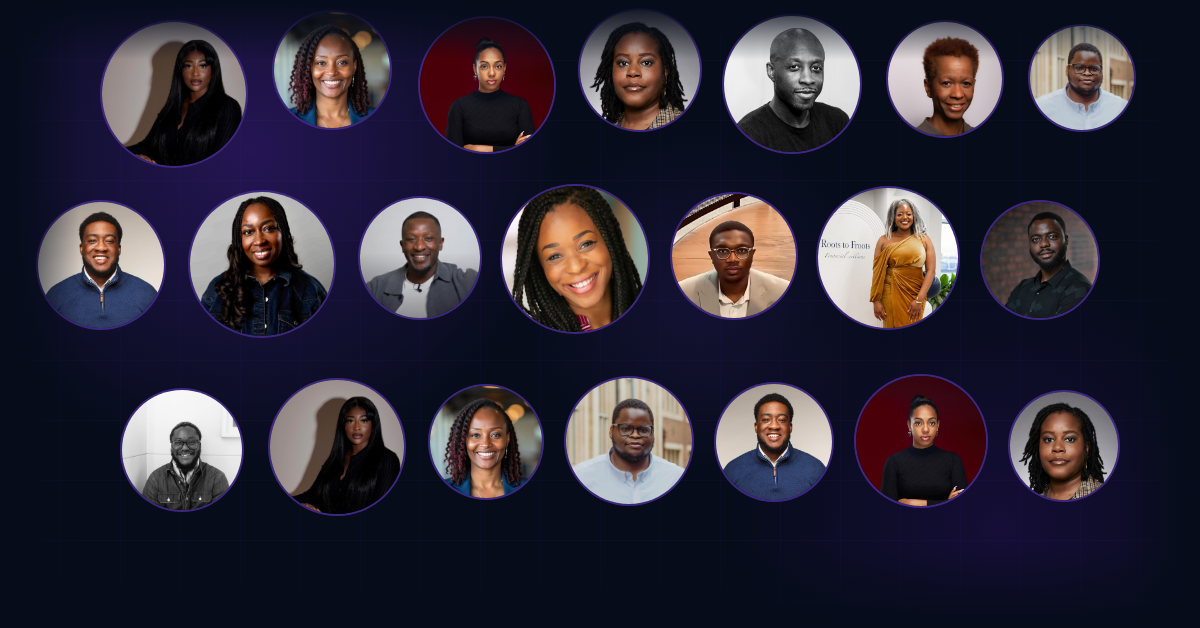
A few weeks ago someone asked me why I was already pulling together a team and an advisory board when Black in Fintech was still in its early stages. It's a fair question. So why the structure, and why now?
The honest answer is because I've seen what happens when you don't.
Communities built on one person's energy are fragile. They move fast when that person is energised, and they stall when life gets in the way. I wanted to build something that could outlast any one moment, any one person, including me. That means putting the right people around the mission from the start.
What keeps communities like this alive is belief. Belief in the mission, belief in each other, and the sense that the work actually matters.
It Takes a Community to Build a Community
The most common thing I hear from community builders is some version of: I'm doing everything myself and I'm burning out. I understood that risk early. No matter how passionate you are, you cannot be the events lead, the content creator, the partnerships manager, and the community manager all at once. Not sustainably.
A core team changes that. It distributes the weight. It means the community doesn't have to wait for one person to have bandwidth. Different people bring different strengths, and when those strengths are pointed at the same mission, things move faster and feel more alive.
But beyond efficiency, something deeper happens when people feel genuine ownership over what they're building. It stops being something they simply participate in and becomes something they feel invested in. That shift matters.
Stanford's Social Innovation Review puts it plainly: the most sustainable social initiatives rely on distributed leadership. Not because founders aren't capable, but because shared ownership creates shared resilience.
What an Advisory Board Actually Does
I want to be honest about what an advisory board is and isn't. It isn't a vanity row of logos or a list of impressive names who disappear after the announcement. Done well, it's one of the most valuable assets a community can have.
Our advisors — Perpetua, Iana, Anthony, Kaley, and Fumbi — each bring something specific. Regulatory depth. Policy experience at the highest levels of fintech. Investment perspective. Operational leadership. Enterprise sales. That isn't a coincidence. It wasn't just about their titles. Each person was chosen because of the gap they fill.
An advisory board opens doors that a founding team simply can't reach yet. It helps build credibility while you're still earning it. It connects you to ecosystems that would otherwise take years to access. And just as importantly, it keeps the mission honest when short term pressures make it easy to drift.
BoardSource's research on nonprofit governance consistently finds that organisations with engaged advisory boards are more likely to secure partnerships, expand their networks, and stay aligned with their mission over time. That matters.
The Communities That Got Here Before Us
We're not the first to do this. The communities I most respect figured this model out early.
Women Who Code launched in 2011 with a clear volunteer leadership structure and an advisory board connected to the biggest names in tech. By 2022 they had grown to more than 360,000 members in 145 countries. Their volunteer chapter leaders built grassroots trust. The advisory board helped open corporate doors. Both were necessary.
Django Girls has run more than 1,000 free programming workshops across over 100 countries, entirely through volunteers. Every workshop has clearly defined roles: organiser, coach, and support. The clarity of those roles is what makes the model work. People know what they're signing up for and what good looks like.
AfroTech grew from a niche event into one of the most influential platforms for Black professionals in tech, powered by ambassadors and strategic advisors who championed the mission inside companies, universities, and ecosystems the founding team couldn't reach alone.
Product Hunt is another interesting example. It began as a simple community where people shared new products they loved. Over time that community became one of the most influential launch platforms in tech, helping thousands of startups gain visibility, attract users, and raise investment. What made it powerful was not just the platform itself, but the community behind it.
The common thread is simple. Communities scale when people feel ownership over building them.
Communities scale when people feel ownership over building them. Not just attending them. Building them.
Structure Is a Form of Respect
There's one more thing I want to say about this, because it often gets overlooked.
When you ask someone to give their time voluntarily, the least you can do is be clear about what you're asking for. Ambiguity is exhausting. People burn out not just from overwork but from not knowing whether what they're doing matters.
NCVO's volunteering research found that 68% of volunteers who leave organisations cite unclear roles or lack of recognition as the reason. Not a loss of belief in the mission. They still believed. They just didn't know where their effort was making a difference.
Defined roles are a form of respect. Public recognition is a form of respect. Bringing in an advisory board that takes the mission seriously is a form of respect. It tells everyone giving their time that this work is real and that their contribution matters.
That's the kind of community I'm trying to build. One where people can grow their careers, expand their networks, and feel genuinely proud to be part of it.
To Our Team and Board
To every person who said yes, to a team role, to an advisory position, to showing up for this community before it was fully formed, thank you. You are the proof of concept.
Black in Fintech exists because the fintech industry has a representation problem, and because a growing number of extraordinary people believe that problem can be solved.
The team and the board are not just operational structures. They are a statement of intent.
This is not a one person project. This is something we're building together, deliberately, with the long term in mind.
And the moment a community member looks at the people behind it and thinks, that could be me, that's when we'll know it's working.
That is the point. That has always been the point.
With gratitude,
Valerie Kontor
Founder, Black in Fintech
References
- Stanford Social Innovation Review. Distributed Leadership in Social Initiatives. https://ssir.org
- BoardSource. Research on Nonprofit Governance. https://boardsource.org
- NCVO. Volunteering Research: Why Volunteers Leave. https://ncvo.org.uk